The Difference Between ADS-B Coverage and True Global Flight Visibility
- ads-b
- flight-data
- aviation-data
- global-flight-tracking
- flight-visibility
- aviation-technology
- data-coverage
- real-time-flight-data
- operational-visibility
- airnav-systems
- b2b

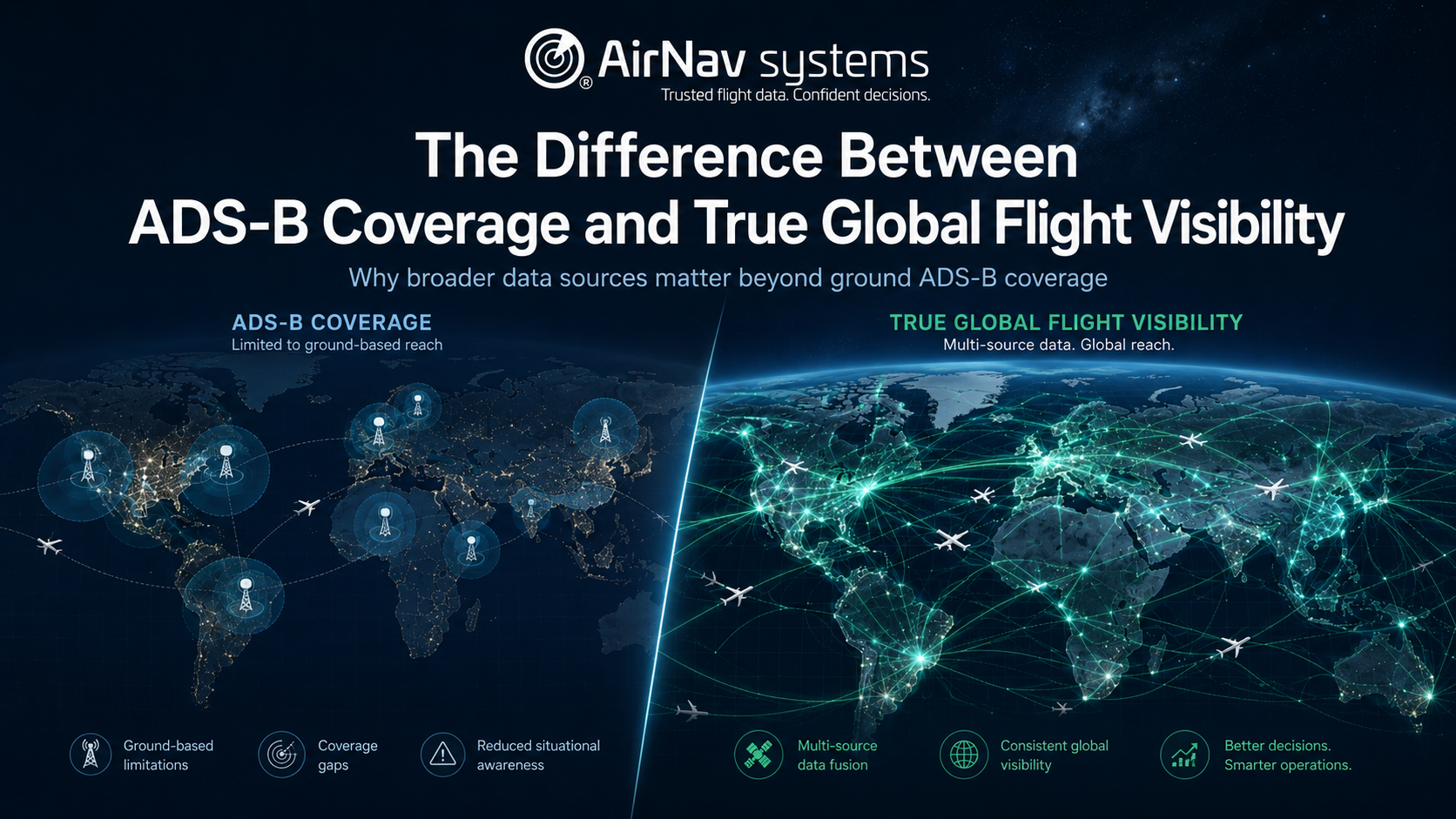
When companies look for flight data, one of the first things they often hear is coverage.
A provider may claim wide ADS-B coverage, strong network reach or broad visibility across key regions. At first glance, that can sound like the same thing as global flight visibility. But they are not the same.
Understanding the difference between ADS-B coverage and true global flight visibility is important for any aviation company that depends on flight data for products, monitoring, analytics or operational awareness.
What ADS-B coverage really means
ADS-B coverage usually refers to the ability to receive aircraft position data from ADS-B sources across different areas.
This matters because ADS-B remains one of the most important foundations of modern flight tracking. It helps companies see aircraft movement, follow routes and build real-time visibility into air traffic activity.
But coverage on its own only tells part of the story.
A provider may have broad ADS-B reach in certain regions, yet that does not automatically mean the output creates strong and consistent global visibility for the end user.
Why coverage is not the same as visibility
Coverage is about where signals can be received.
Visibility is about how usable, reliable and complete the operational picture becomes once that data is processed, validated and delivered.
That difference matters because aviation companies do not just need data points. They need a dependable view of what is happening across fleets, routes, regions and airport environments.
This is where many comparisons between providers become misleading. Strong ADS-B coverage can still leave gaps in quality, resilience or operational usefulness if the data is not supported by the right infrastructure and data strategy.
What true global flight visibility depends on
True global flight visibility is usually built through more than one input.
It depends on factors such as:
-
- source diversity
- consistency of output
- latency
- resilience
- quality control
- the ability to support different operational environments
That is why visibility should be understood as a broader operational outcome, not just a signal-collection claim.
For aviation companies, what matters most is not simply whether aircraft can be seen in some areas. It is whether the data creates a stronger and more reliable view across the environments that matter to the business.
Why this matters for aviation companies
The difference between ADS-B coverage and global flight visibility becomes especially important when flight data is being used for real business purposes.
Companies may rely on flight data for:
- monitoring operations
- customer-facing platforms
- internal tools
- airport awareness
- reporting and analytics
- decision support
In these cases, broad coverage alone is not enough. The data has to be usable, stable and relevant to the real use case.
That is where stronger aviation data foundations create more value.
Where AirNav Systems fits in
At AirNav Systems, we see this difference clearly.
Coverage matters, but the real goal is to help companies build greater visibility and stronger operational awareness through aviation data. That is why the conversation is not only about ADS-B reach. It is also about how data is turned into something more reliable, practical and relevant.
This is where Data Solutions and On-Demand APIs connect directly to the topic, helping businesses use aviation data in products, platforms and internal systems.
It is also where solutions such as FlightWatch and AirportWatch become relevant, providing clearer operational visibility into flight and airport activity.
Conclusion
ADS-B coverage is important, but it is not the same as true global flight visibility.
Coverage describes where data can be received. Visibility reflects the strength, usability and reliability of the operational picture created from that data.
For aviation companies, that distinction matters. Because the real value of flight data does not come solely from signal reach. It comes from how well that data supports monitoring, products and decision making in practice.
Trusted flight data. Confident decisions.