What Makes a High-Quality Flight Data Feed?
- b2b
- flight data
- Data Quality
- Real-time Data
- APIs

Many flight data feeds may look similar at first.
They all seem to offer aircraft positions, routes, timestamps and real-time visibility. But for aviation companies using data in products, operations, analytics or monitoring, the difference between providers can be significant.
A high-quality flight data feed is not just about access. It is about whether the data is reliable enough for real business use.
The key factors behind data quality
A strong flight data feed usually depends on a few core elements:
- Coverage — not just broad claims, but meaningful visibility where it matters
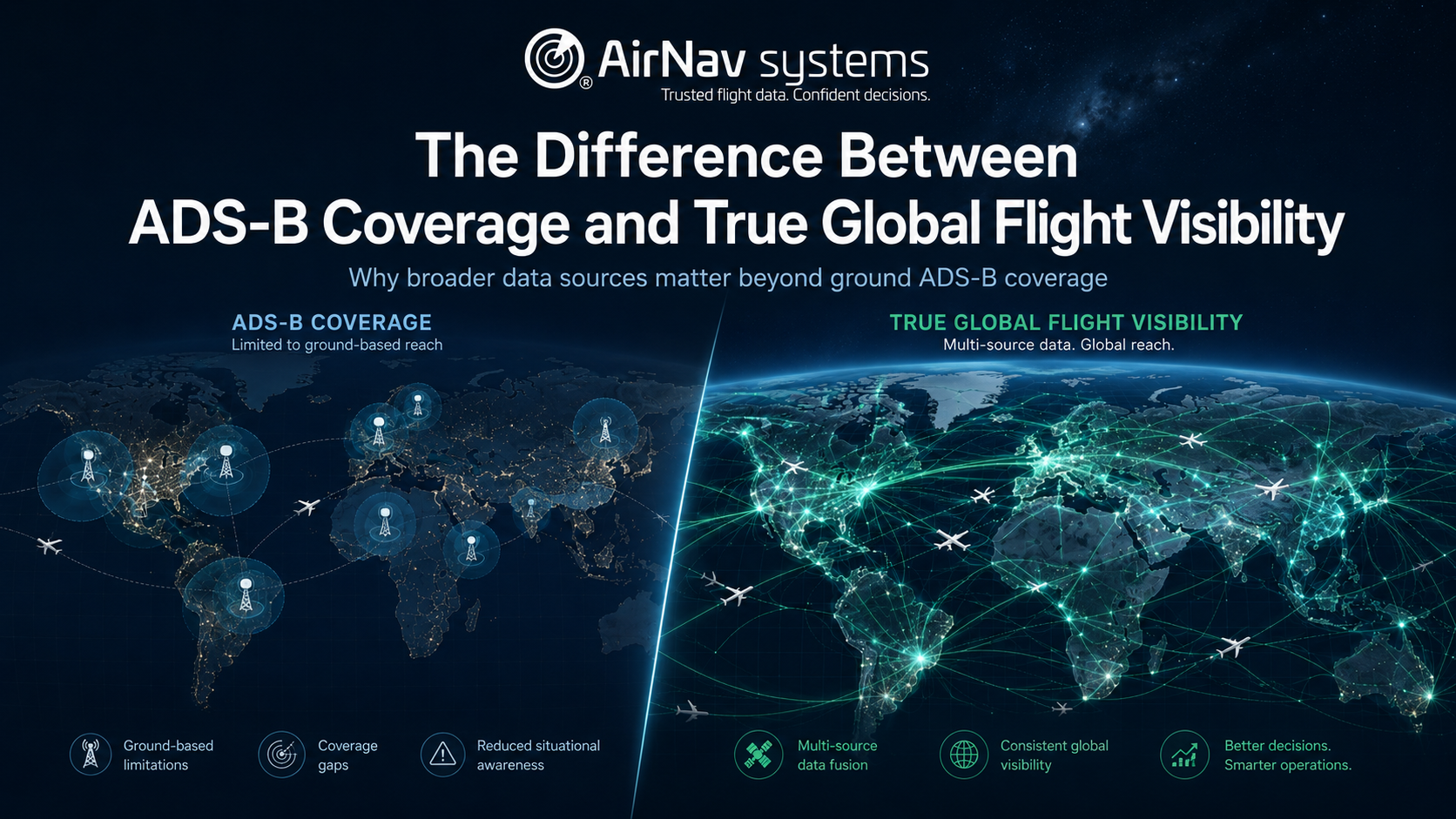
- Source diversity — stronger multi-source data helps reduce blind spots
- Latency — data needs to be timely enough for real-time use cases
- Consistency — outputs must be dependable across workflows and reporting
- Filtering and validation — raw data is not enough if it is not cleaned and structured properly
These are the factors that separate a basic feed from one that can support real operational and analytical needs.
Why this matters
For aviation companies, weak data can lead to:
- incomplete visibility
- inconsistent reporting
- lower confidence in outputs
- weaker operational awareness
A stronger feed supports better monitoring, cleaner analytics and more dependable decision-making.
That is why choosing a flight data provider should never be based only on surface-level visibility. The real question is whether the data is strong enough for the use case.
Why this matters when choosing a provider
A flight data feed is not just a technical input. It becomes part of a company’s visibility and decision-making infrastructure.
That is why AirNav focuses on trusted aviation data supported by broad coverage, multiple data sources and solutions designed for real-world use cases.
Depending on the need, that can include:
- real-time data streams
- On-Demand APIs
- historical and reporting-focused data access
- operational tools such as FlightWatch
- airport-focused visibility through AirportWatch
A high-quality flight data feed is not just about seeing aircraft. It is about having data that is strong enough to support what the business is trying to build.
Trusted flight data. Confident decisions.