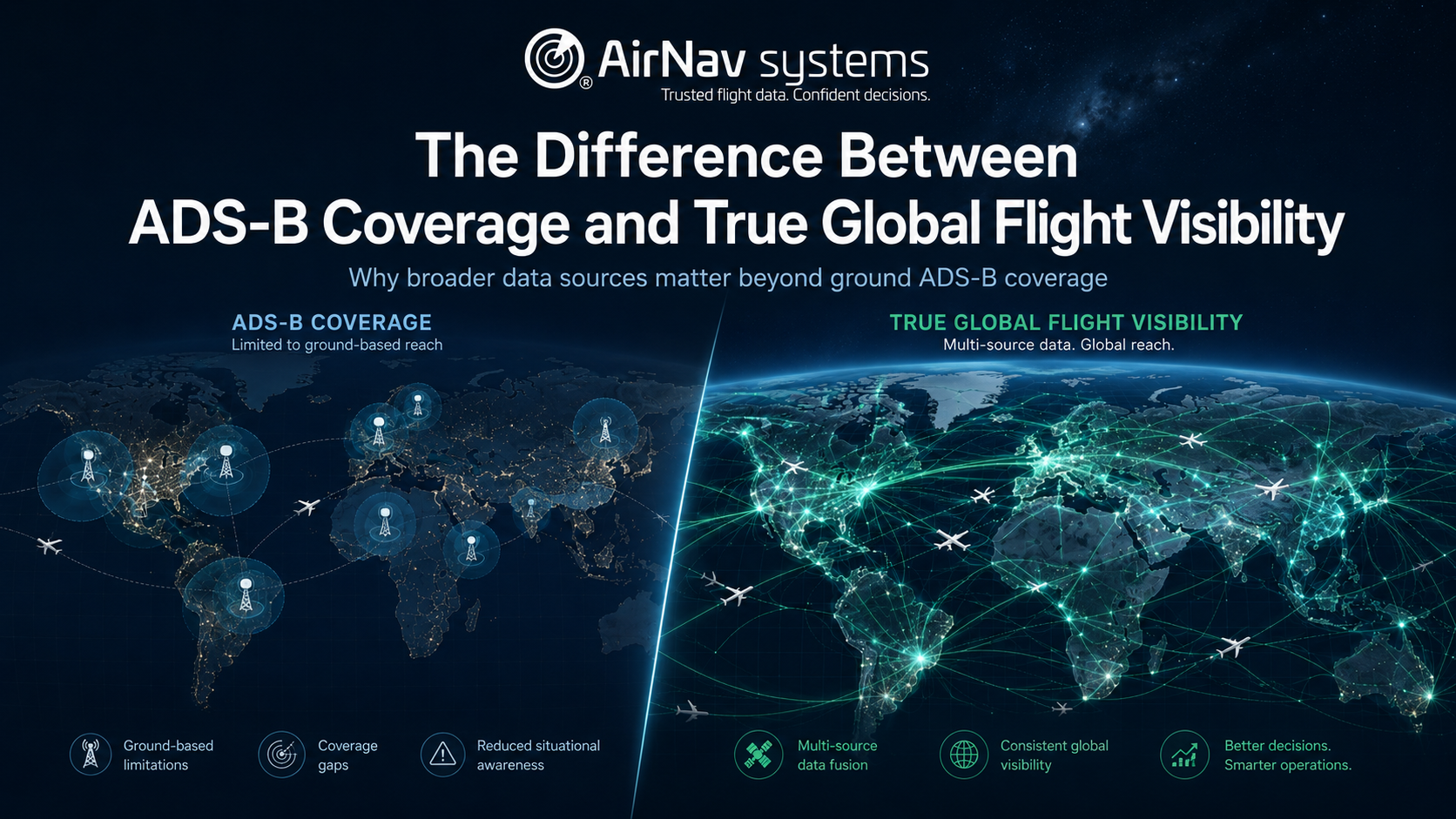
Why Not All Flight Data Is Created Equal
- flight-data
- aviation-data
- ads-b
- aviation-intelligence
- flight-tracking
- aviation-technology
- data-quality
- airnav-systems
- operational-intelligence
- real-time-flight-data
- b2b

At a glance, flight data can seem straightforward.
An aircraft moves, a position is updated, and that information appears on a screen. From the outside, many providers may seem to offer the same thing: aircraft positions, routes, timestamps and real-time visibility.
But in practice, not all flight data is created equal.
For aviation companies using data in products, operations, analytics or monitoring, the difference between providers can have a real impact.
Flight data is not a commodity
One of the biggest misconceptions in the market is that flight data is interchangeable.
Two providers may both offer real-time flight data, but that does not mean the quality, consistency or usefulness of that data is the same.
The real value of a flight data provider depends on factors such as:
- coverage
- latency
- consistency
- source diversity
- data cleaning and filtering
- the ability to support real operational use cases
That is where the difference starts to matter.
Coverage alone is not enough
“Global coverage” can sound impressive, but broad coverage claims do not always mean strong visibility in practice.
What matters is not only where data exists, but how reliable and usable that data is across different environments and use cases.
For aviation companies, weak data can lead to:
- incomplete visibility
- inconsistent reporting
- lower confidence in outputs
- tracking gaps
- weaker customer or operational experience
In other words, access to data is not the same as dependable visibility.
Better use cases require better data
The more advanced the use case, the more important data quality becomes.
A simple map view may tolerate gaps.
A business using flight data in an API, operational platform, dashboard or reporting workflow cannot.
That is why companies should look beyond basic flight tracking and ask:
- Is the data reliable enough for business use?
- Is it timely and consistent?
- Can it support both operational and analytical needs?
- Does it fit the actual use case?
These are the questions that matter when choosing a provider.
Why this matters when choosing a flight data provider
The right provider is not just a source of aircraft positions.
It becomes part of your visibility, intelligence and decision-making infrastructure.
That is why AirNav Systems focuses on trusted aviation data supported by broad coverage, multiple data sources and solutions designed for real-world use cases.
Depending on the need, that can include:
- real-time data streams (link for the product page)
- On-Demand APIs (link for the product page)
- historical and reporting-focused data access (link for the product page)
- operational tools such as FlightWatch (link for the product page)
- airport-focused visibility through AirportWatch (link for the product page)
So while flight data is often treated like a commodity, the reality is very different.
Not all flight data is created equal and for companies that depend on accuracy, confidence and operational relevance, that difference is critical.
Trusted flight data. Confident decisions.